The results of the combined research team composed of five scientific research institutes from Germany, Mexico, the United States and other countries indicate that when the waveguide beam splitter is excited by N indistinguishable photons, the multiphoton state that occurs will evolve. The way of evolution is as if they are coupled to each other, and the coupling strength is opposite to the coupling strength exhibited by the reunion fractional Fourier system.
Based on the nature of the fractional Fourier transform, the researchers derived the 50/50 beam splitter's law of multiphoton suppression, thereby extending the Hong-Ou-Mandel effect. In addition, by using a single waveguide beam splitter combined with a photon-number-resolving detector, the researchers also tested the ability to stop multi-photon quantum random walks at the same time.
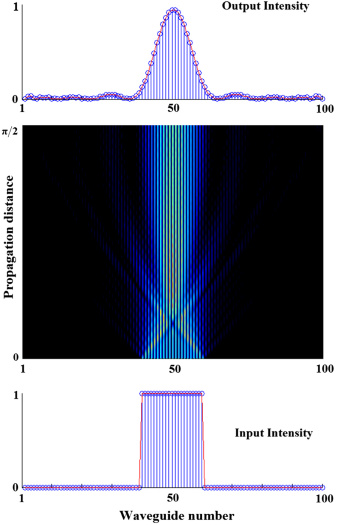
The researchers expect that the multi-photon lattice-like mold repair structure reminded in this task will help identify new effects and uses of high-dimensional multi-photon states.


 客服1